
How healthcare leaders are thinking about climate readiness in 2026
In the midst of a healthcare affordability crisis and rising energy costs, healthcare organizations are also facing increasingly severe and frequent extreme weather events driven by climate change. We convened representatives from hospitals and other health sector organizations for unfiltered one-on-one peer discussions about climate resilience, providing a window into the state of healthcare climate preparedness in 2026.
Over several months, 49 individuals from 30 organizations participated in 22 meetings, exchanging successes, challenges, resources, and connections. Participants included CARES Pledge signatories, White House / HHS Health Sector Climate Pledge signatories, and Practice Greenhealth partners, ranging from those just getting started to organizations with advanced climate resilience plans developed with community input.
Regardless of where they were in the process, many participants described this time as challenging due to enormous financial stressors. However, even organizations in very constrained funding environments have made significant progress.
Here’s what they are saying…
Leveraging existing processes & external commitments can kickstart progress
Many participants said their journey started with organizational commitments to the White House / HHS Health Sector Climate Pledge (organizations can sign a similar commitment through Health Care Without Harm’s CARES). Other participants described actions initiated by commercial property insurer incentives or state regulatory requirements, such as California’s SB261.
In many cases, plugging into existing work, such as hazard vulnerability assessments, community health needs assessments, and planned building upgrades (energy efficiency, backup power), is an effective way to get started and allows resilience leaders to leverage existing resources.
Participants described success when they were able to align internal departments around shared resilience goals and to share climate data across teams, including emergency preparedness, business continuity, community benefit, and sustainability teams.
For major changes, like building hardening and on-site renewable backup power, executive support is often necessary – and external pressure from sector-driven pledges and policy action can inspire buy-in.
Data & planning resources are not meeting needs
“Don’t let perfect be the enemy of good – take action with what you have!” This refrain was repeated in numerous conversations around prospective climate data, and is reflective of the challenges facing climate resilience planners.
Numerous climate modeling tools are in use by healthcare resilience planners (see our resilience resource library), but all have various limitations. Existing tools such as FEMA’s Future Risk Index often lack the detail needed to guide facility-level planning, and the impacts of climate change and shifting weather patterns remain difficult to predict with accuracy.
Participants emphasized that not being able to assess their true facility risk makes conversations with leadership more challenging, but some headway has been made by focusing on place and experience-based risks, such as responding to recent wildfires.
In light of these data gaps, participants are yearning for more healthcare-focused resources and tools to provide tailored data and guide planning from start to implementation.
Ready to build your climate resilience plan?Designed for healthcare organizations early in their journey with some internal alignment in place, our climate resilience plan building series helps you take the next step toward a more structured approach. Across three sessions, you will explore how to integrate climate resilience into core operations, including emergency preparedness, facilities, clinical care, and supply chain. |
Connecting with your community is vital, yet challenging
Participants shared their excitement about solutions they were piloting to build community resilience, including the leveraging of geocoding for proactive health alerts, utilizing Medicaid to provide equipment such as air filters directly to patients, and prioritizing climate resilience and environmental justice within internal grantmaking and funding initiatives.
Success stories were also shared regarding the creation of patient-facing resource libraries either focused on climate-hazard-specific guidance resources to share with patients and community members, or cataloging local, city, and county resources available to support community members.
These successful efforts to build community resilience align with what we’re hearing from across our network. Dr. Alexander Garza, SSM Health chief community health officer, advises, "Do things in the routine that you would do in the extreme. Build those relationships in peacetime – so you have them when you need them."
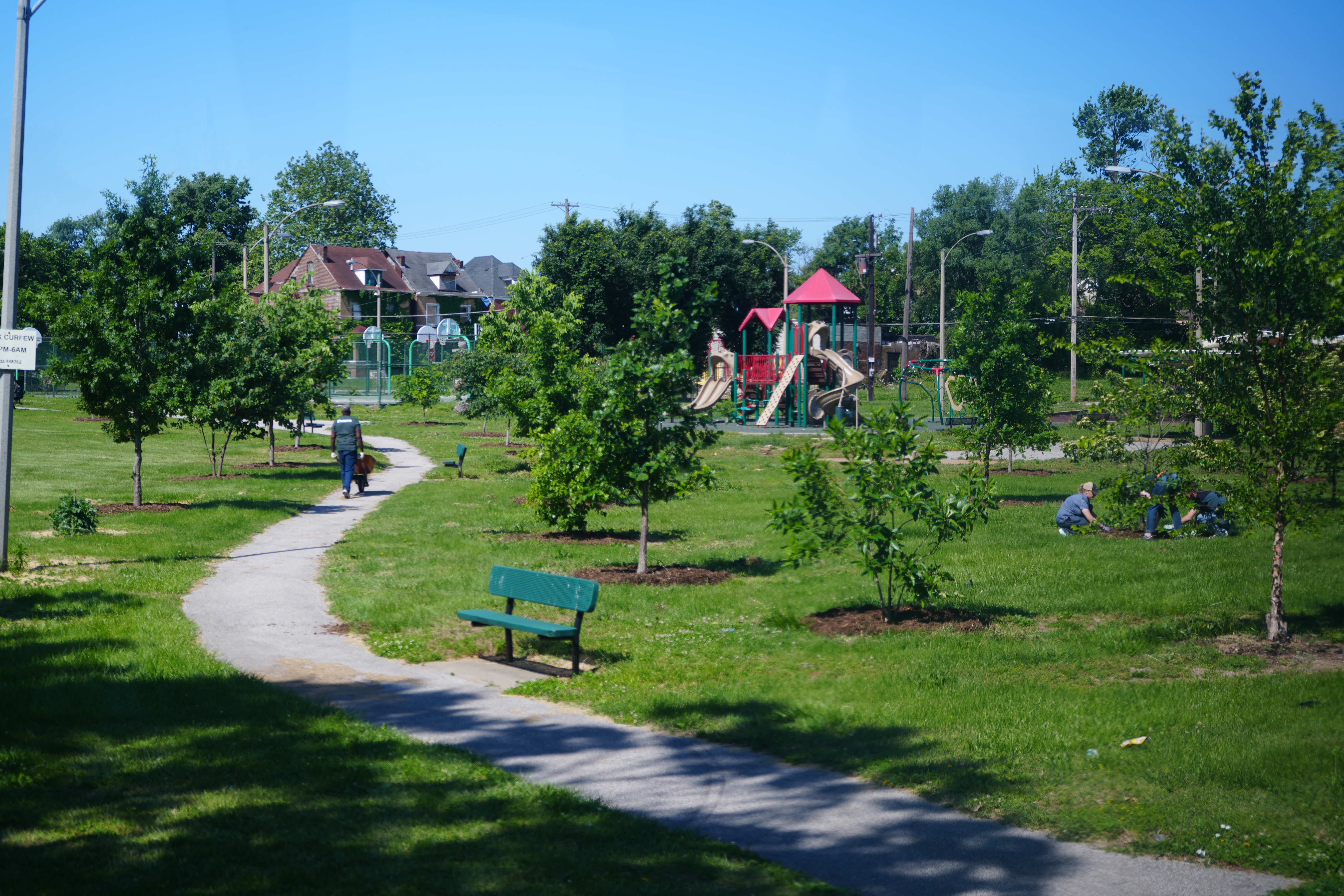
Garza, who served as the city’s medical adviser when the May 2025 tornado devastated North St. Louis, was part of what health and community leaders described as a “web across St. Louis” that mobilized healthcare and community-based organizations while meeting the immediate health needs of thousands of people impacted by the tornado. He cites community connections built before the disaster as the key to surviving it.
Similar strategies are popping up across the country. Our Place-Based Initiatives are building deep, trusting, and equitable partnerships between community stakeholders and health systems to enhance community climate resilience. We're launching this work in four locations – Boston, Bay Area, Detroit, and Miami – where healthcare and community partners have committed to equitable planning, decision-making, and collaborative solutions-building.
Co-designing climate resilience: Building equitable community partnershipsJoin this session to explore how health systems build the deep community partnerships needed to plan ahead, respond effectively, and recover equitably from climate disruption. Examples will draw from community resilience initiatives currently underway in four regions across the country. |
These successes are noteworthy, as community resilience remains an enormous area of opportunity for healthcare. A wide range of challenges were also discussed by participants, ranging from difficulty in prioritizing community work to specific concerns regarding how to engage community members in an equitable manner. Some participants said they were worried about reaching out to environmental justice and community advocacy groups, as they might not be able to provide meaningful support due to limited resources.
Many also described the competing demands on these groups (“I would be the sixth organization reaching out to them”). Some health systems are finding success by joining forces to coordinate outreach, thereby reducing repeated requests from the same community groups. While engagement with community-based organizations around resilience remains a challenge for many healthcare institutions, many of our partners are determined to overcome the barriers.
Final thoughts
Overall, healthcare organizations from this cohort described significant progress and successes across many areas of their resilience work. This progress is occurring despite many external challenges, including financial pressures across the sector and federal policy setbacks.
At the same time, the healthcare leaders continuing to push this work forward are aware of the significant threats facing their organizations if they do not act now. For example, 58% of Practice Greenhealth partners who submitted data to the 2026 Environmental Excellence Awards reported extreme weather impacts in the last year, representing a continued upward trend of these impacts. Partners are responding to these impacts, as 62% reported having developed a climate resilience plan.
These peer-to-peer conversations exemplify how healthcare leaders are able to make their organizations more resilient by relying on their peers, finding and layering data, and deepening their engagements with community members. While the work is not easy, these actions offer a roadmap for others looking to help their organizations adapt to the risks of the changing climate.
Curated resources & sample plansThe resilience resource library is a collection of resources assembled and curated by Health Care Without Harm and Practice Greenhealth to support healthcare organizations in building resilience to the impacts of climate change. These resources cover a wide range of climate resilience topics and will offer insights to organizations at any stage of resilience work. |
Join Practice Greenhealth
Practice Greenhealth is the healthcare sector’s go-to source for information, tools, data, resources, and expert technical support on sustainability initiatives that help hospitals and health systems meet their health, financial, and community goals.

Who We Are
Practice Greenhealth is the leading sustainable healthcare organization, delivering environmental solutions to more than 1,500 hospitals and health systems in the United States and Canada. Partnership opportunities include hospitals, health systems, community health organizations, NGOs, nonprofits, government, academic institutions, and the healthcare value chain.