
Rush University Medical Center: A collaborative approach to reducing plastics in the OR
Plastic waste | Case study
"Being able to include all of our stakeholders; starting a team [with] multiple viewpoints and creating trust was the most successful part of our pilot."
– Dr. Ami Shah, pediatric surgeon, director, office of clinician experience
KEY TAKEAWAYS
|
The challenge
Rush University Medical Center is a large, urban academic medical center with a high-volume surgical program across 36 operating rooms and a highly complex perioperative environment. RUMC is part of the larger Rush University System for Health, located throughout the greater Chicago area.
Plastics reduction is a strategic priority at Rush, driven by institutional commitments to reduce chemicals of concern, such as PVC and DEHP, and through Rush’s goals with its Practice Greenhealth partnership. Moreover, university-led research is examining the health impacts of microplastics. Historically, plastic reduction efforts were concentrated in non-clinical areas. For example, food and nutrition services transitioned to BPI-certified compostable products when appropriate, and strategic sourcing partnered with vendors to right-size plastic waste can liners.
Building on this momentum, Rush identified an opportunity to extend plastics reduction into clinical spaces.
RUMC has traditionally advanced environmental sustainability through a bottom-up collaborative approach, but chose to try something new for this pilot. The office of environmental sustainability (formerly housed within facilities) moved to the supply chain department to have a more proactive role in promoting sustainability by guiding purchasing decisions for goods and services. This realignment broadened sustainability efforts across a wider range of teams to increase direct collaboration with stakeholders.
Voluntary interdisciplinary working groups were formed, such as the greening the OR working group and the sustainable procurement working group, bringing stakeholders together across departments to co-develop positive impact solutions. These groups intentionally connect siloed teams to “multisolve,” addressing clinical, operational, financial, and environmental challenges simultaneously.
The data was clear: Disposables were too costly
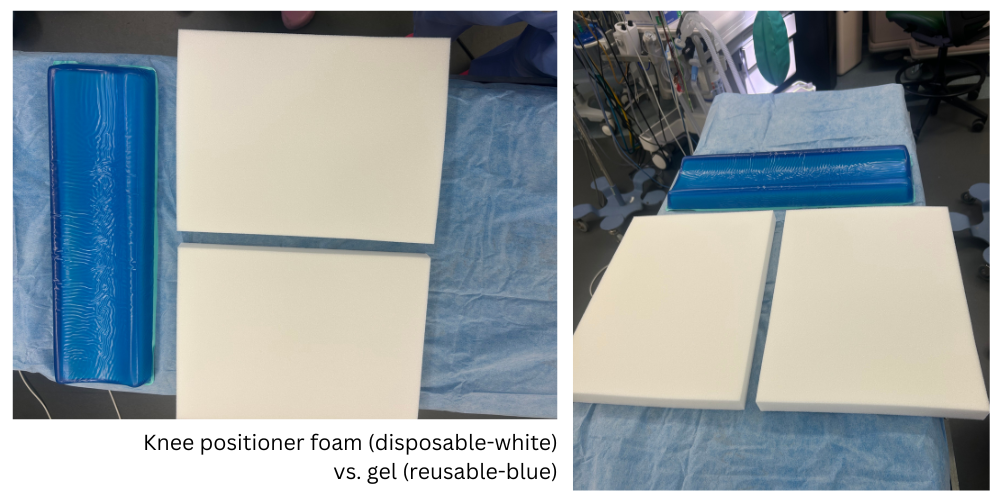
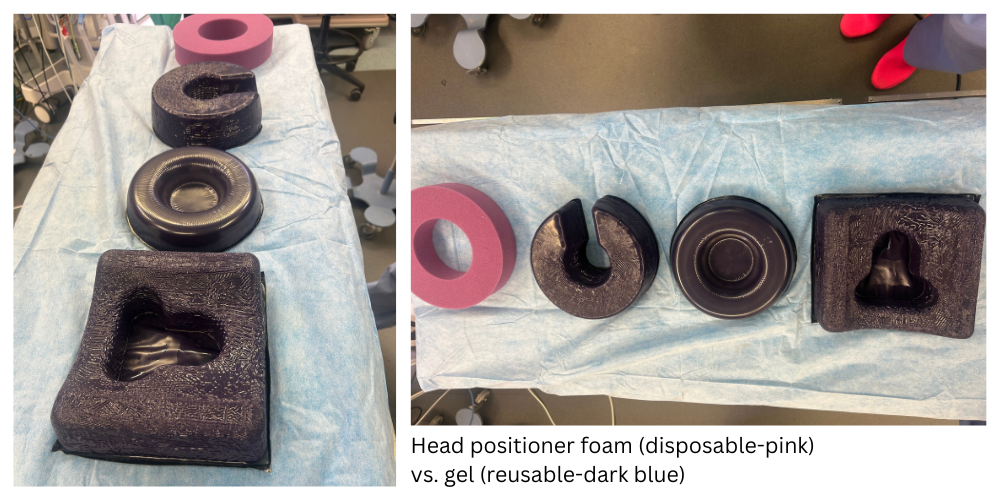
Like many health systems, Rush historically relied on disposable patient positioning devices (PPDs) in their surgical areas that are made of polyurethane foam. These plastic products are designed for convenience and infection control, but are typically used once and discarded. For Rush’s sustainability and supply chain leaders, the environmental and cost implications became increasingly difficult to ignore.
Concurrently, clinicians expressed growing interest in reducing the environmental footprint of surgical care alongside maintaining safety, efficiency, and familiarity in a fast-paced surgical setting. Clinical champions, including Dr. Ami Shah, motivated by concerns around microplastics exposure, and Abigail Crabtree, assistant unit director in the operating room, focused on reducing clinical waste and played a critical role in advancing this work. Their leadership was instrumental in catalyzing the transition toward reusable patient positioning devices.
Data helped crystallize the challenge. Rush’s group purchasing organization provides patient positioner category analyzed spend data, including devices that are not traditionally considered to be patient positioners in the operating room setting – such as headrest pillows, mattresses, and stirrups. RUMC’s total spend in the patient positioner category was approximately $405,000, and of this spend, approximately $60,000 is for head, chest, heel, and knee patient positioners for adults and pediatric patients.
Below is a chart showing the volume in quantities of units purchased across all disposable PPDs, as well as a more granular look into the three main devices targeted: head positioners, knee positioners, and heel positioners. For the aforementioned items in 2024 and 2025, less than one percent of the approximately 18,000 PPDs were reusable alternatives.
Quantities of disposable patient positioning devices
Target reusable positioner | Current state | Annual volume of disposables used |
| Head positioner | Foam head positioners | ~15,550 |
| Knee positioner | Foam knee positioners | ~1,890 |
| Heel positioner | Foam heel positioners | ~1,690 |
The limited number of reusable alternatives were purchased for a few surgeons who wanted to utilize them. However, without consensus building around the new products, uptake was limited. The staff in the anesthesia team, for example, were unable to provide feedback, and therefore were assumed to disapprove of head positioners.
Overcoming barriers to standardize reusables
In 2025, Rush decided to embrace this opportunity. Yet, moving from isolated use of reusable PPDs to standard practice was not straightforward. Barriers arose throughout the process at varying intervals, which included:
Logistics
Logistics and coordination with suppliers took more time than expected, as some supply chain constraints and samples were made-to-order, taking more than two months to begin clinical testing.
Culture
The culture shift inside the organization was less of an obstacle with the clinical champions shouldering the effort in the clinical spaces, but a hands-on communication approach helped shift the thinking around plastics reduction through the pilot.
Clinical protocols
Because some reusable PPDs were already in use, many of the clinical protocols which include cleaning, storage, handling and end-of-life, were mitigated. But as the pilot expands to new product categories, the team may need to overcome clinical protocol barriers and complete additional work to determine how to use the new products and fit them within the clinical protocols – depending on the specific product category.
Data
As previously mentioned, data is critical. From spend data provided by Rush’s group purchasing organization to internally collected and curated data, the team relies on understanding the specific data to set baseline standards, continually improve upon successes, and inform decision-making. Understanding and interpreting this data can prove to be both a barrier and an opportunity.
A convergence of needs: patient safety, cost, & environmental responsibility
Although reusable PPDs were readily available on the market and already trusted by clinical champions on campus, the limited use at Rush highlighted the scale of waste caused by disposables and the missed opportunity for the health system to reduce waste.
What ultimately motivated action was the convergence of environmental responsibility, cost stewardship, and patient safety. Rush leaders recognized that reducing unnecessary plastics could align with clinical excellence – if the right process and partnerships were in place.
To build leadership and clinician buy-in, the project team framed this plastics reduction initiative as an effort to improve patient health and quality of care while reducing costs and waste.
Ready to multisolve plastics reduction at your facility?Rush’s advice to fellow Practice Greenhealth partners: “Meaningful change begins with building culture from within. Start where you have trusted champions and focus on one high-impact product category to build early momentum. By intentionally embedding environmental sustainability into regular conversations and everyday workflows, health care organizations can move from pilots to lasting change.”
|
The solution
Practice Greenhealth and Health Care Without Harm served as a trusted guide throughout Rush’s journey, providing structure, technical assistance, and access to a national peer learning community through the plastics reduction pilot and peer strategy circle.
Data from the 2025 Practice Greenhealth Environmental Excellence awards shows that 68% of facilities (out of the 320 facilities that report using reusable surgical items) are implementing reusable PPDS in most cases where clinically applicable.
This support was amplified by Rush’s pre-formed cross-departmental coalition. The coalition was comprised of working groups that reflected the realities of perioperative decision-making including:
- Greening the OR working groups (clinicians and infection prevention and control)
- Sustainable procurement working group
- OR skin committee leadership
- Vendor partners
The initiative began with early engagement of Rush’s strategic sourcing team through the sustainable procurement working group to assess which product categories were contractually and operationally feasible for a plastics-reduction pilot. In parallel, the office of environmental sustainability consulted the greening the OR working group to understand clinical readiness and identify opportunities that would maintain safety, efficiency, and clinical acceptance.
Through the sustainable procurement working group, patient positioning devices (PPDs) emerged as a strong candidate because the vendor was part of Rush’s group purchasing organization, specifically through their regional aggregation group. The regional aggregator presented a favorable pricing opportunity, which strategic sourcing reviewed and approved by opting into the group purchasing organization agreement. This aligned with earlier internal discussions about transitioning from disposable to reusable products, making the timing appropriate to advance a pilot.
A multisolving engine of change
Concurrently, the greening the OR working group evaluated a short list of potential products, including laryngoscope handles, blood pressure cuffs, and PPDs from a clinical workflow perspective. With input and encouragement from Shah, the group determined that PPDs were the most viable option, as reusable PPDs were already in limited use within the operating rooms. This dual-track evaluation ensured that the final selection balanced contractual feasibility with clinical acceptance and readiness.
The initiative also benefits from the aforementioned strong clinical champion. Crabtree, who leads a greening the OR workstream for nurses and technicians, focused on environmental improvement projects.
This coalition became the multisolving engine of change. Together, members navigated approval through the OR value analysis committee, evaluated clinical performance, and co-developed protocols for cleaning, storage, and end-of-life management of reusable gel PPDs.
A blueprint for transitioning to reusable products
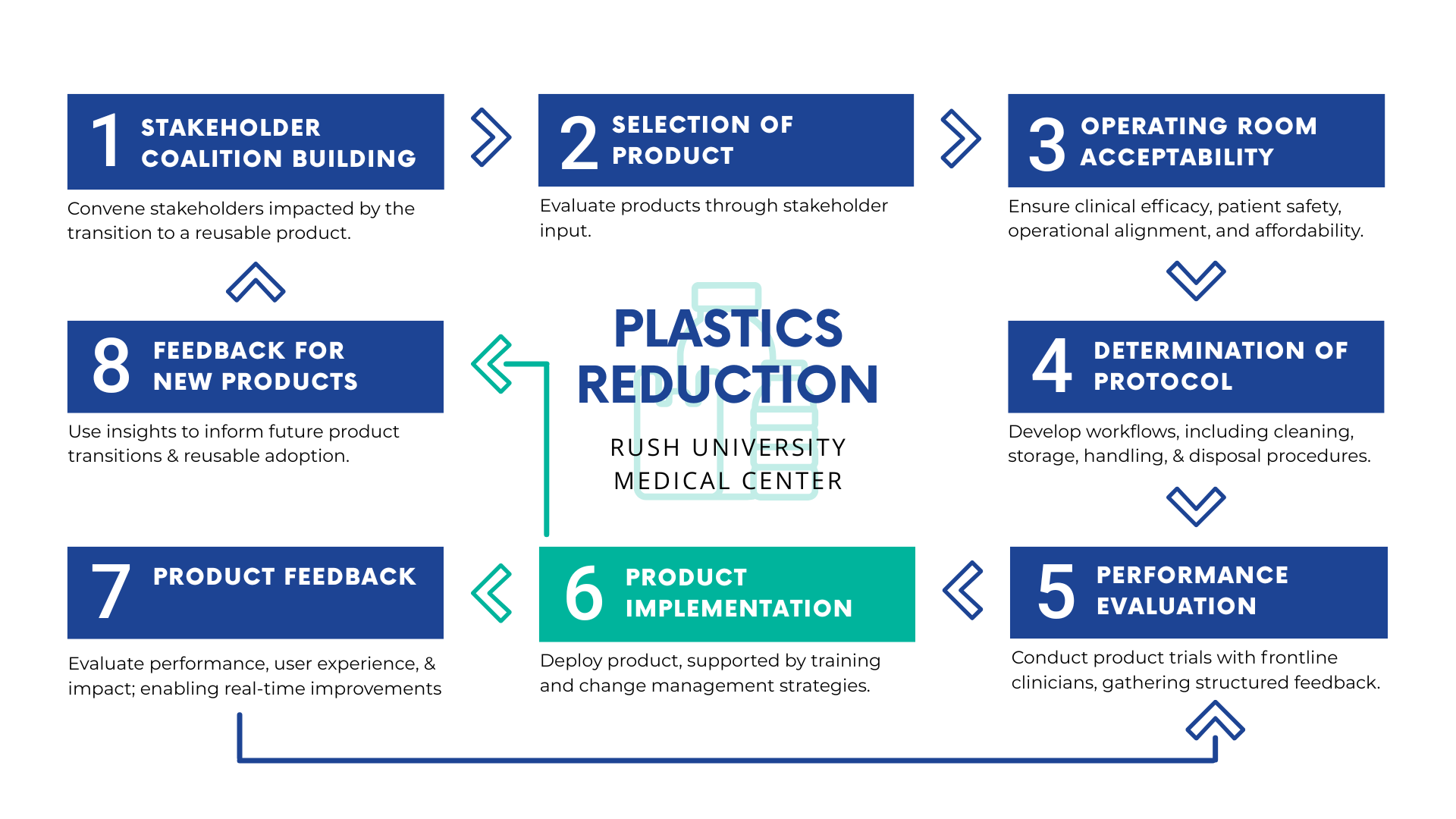
Step-by-step details1) STAKEHOLDER COALITION BUILDING Convene a cross-functional group of stakeholders impacted by the transition to a reusable product, ensuring representation from clinical, supply chain, environmental services, infection prevention, sustainability, and finance. 2) SELECTION OF PRODUCT Evaluate candidate products through structured, multi-stakeholder input to identify the option with the highest likelihood of clinical acceptance, operational feasibility, and sustainability impact. 3) OPERATING ROOM ACCEPTABILITY Submit the proposed product through the formal value analysis committee process—a structured, multidisciplinary evaluation to ensure clinical efficacy, patient safety, operational alignment, and optimal total cost of ownership. |
The power of education and communication
Education and communication emerged as the most significant lessons learned throughout the project. Although reusable head and chest positioning devices had previously been purchased, anesthesiologists did not approve the use of the reusable head PPDs, and adoption of reusable chest rolls varied across service lines, with some clinicians preferring blankets. This highlighted a key communication gap, as non-clinical stakeholders were unaware that OR staff had already implemented a reusable option for chest rolls.
During the Practice Greenhealth and Health Care Without Harm on-site visit, there was initial clinician hesitation to shift to reusable PPDs, but after learning from our brief conversation that the foam PPDs are made out of disposable plastics, stakeholders understood that reusable PPDs would be more beneficial.
The discussions revealed two important takeaways:
- The shift to reusables will be slow, and when clinically necessary, foam can and should still be utilized.
- This is an opportunity to decrease plastics in the OR and decrease costs.
Engaging with the vendors built shared understanding about the products and shipment timelines. The team discussed the composition of the products being purchased and how to reduce plastics through a full life cycle perspective of the product. The vendors were then able to provide samples and shipment timelines that met Rush’s preferred criteria.
Education and relationship-building were central to success. The team invested time in developing slide decks and education materials tailored to clinical audiences. These were presented during staff meetings to address clinician concerns with safety and the feasibility of the pilot program.
Sustainability champions, particularly from the perioperative space, were empowered to encourage further adoption of the reusable patient positioning devices and spark clinician-to-clinician conversations to build trust and normalize reuse.
Practice Greenhealth amplified Rush’s efforts throughout the pilot. The organization offered evidence and peer examples demonstrating the environmental and financial benefits of reusables. Practice Greenhealth also facilitated on-site engagement and strategic discussions with relevant Rush stakeholders, which provided forums for troubleshooting barriers and exchanging best practices from other hospitals navigating similar challenges.
Rolling out the reusable replacements
The pilot was intentionally designed to be manageable. Supply chain realities – including long lead times for made-to-order reusable devices – required patience and flexibility. Initial quantities were modest through some samples provided by the vendor, allowing clinicians to test the devices, provide feedback, and refine workflows before considering broader adoption.
A representative from Practice Greenhealth met with the team onsite to provide hands-on guidance as they evaluated how best to integrate reusable patient positioning devices (PPDs) into their operating rooms. Together, they examined workflow implications in detail, refining protocols to ensure seamless adoption and clinical alignment. This collaborative, in-person support ultimately positioned the team to begin transition from single-use plastic foam PPDs to reusable gel alternatives in the chosen product categories.
The results
While the reusable PPD pilot is still in its early phase, Rush has already realized meaningful outcomes across operational, environmental, and cultural dimensions.
"The PPD plastics reduction pilot demonstrates how environmental sustainability and cost stewardship can be simultaneously achieved. By transitioning select foam patient positioning devices to reusable alternatives, we are establishing a scalable model for reducing unnecessary plastics that can be applied across care settings as we expand this work throughout the health system.”
– Jeremy Strong, system vice president, chief supply chain officer
Kickstarting operational and financial progress
The initiative began with formal approval and procurement of an initial sample of reusable gel patient positioning devices (PPDs), funded through a targeted sustainability grant. This early capital support reduced financial barriers to pilot implementation and enabled real-world clinical evaluation. As the pilot launched in general surgery, reliance on disposable foam PPDs began to decline, creating an immediate shift in thinking around purchasing patterns and waste generation.
In parallel, the team expanded its lens beyond positioning devices to examine additional plastics and cost-reduction opportunities within interventional services, including evaluation of (intravascular ultrasound) catheter reprocessing. These efforts signaled that the project was not a single-product substitution but part of a broader operational optimization strategy.
Rush continues to identify additional financial efficiencies in the operating room by reviewing surgeons’ preference cards with an eye toward eliminating unnecessary supplies. Preference cards are catalogues of the specific tools, supplies, and room setup that a surgeon prefers to use for a particular type of surgical case. By analyzing these cards, the team discovered that there is avoidable waste and unnecessary spending that can be alleviated.
Collectively, these actions demonstrate measurable progress toward lowering the total cost of ownership while maintaining clinical performance standards.
Environmental impact and cost savings
The transition to reusable gel PPDs could result in a direct reduction of single-use plastic foam entering the regulated and solid waste streams. This material substitution represents a tangible decrease in upstream manufacturing demand and downstream disposal impacts. Additionally, the selected reusable products are manufactured in the Midwest, supporting domestic supply chains, whereas the displaced single-use foam products rely on a mix of U.S. and global production. This geographic consolidation has implications for transportation emissions, supply resilience, and regional economic support.
After analyzing the procurement data and potential reusable alternatives that were identified, it was found that there is the potential to save an average of $20,000 over the course of the next two years post-pilot transition, which marks a 30% decrease in spend across the PPD categories. With the added benefit of cost savings across the specific PPDs, the reduction in waste would be another tangible benefit, with an almost 80% decrease in waste sent to landfill, which translates into roughly 6,400 pounds and potentially several MTCO2e averted annually.
Although single-use devices are lighter on a per-unit basis (under one pound per unit ), their lower weight does not account for the cumulative material volume generated through repeated disposal. In contrast, reusable devices are heavier and more durable by design, generally weighing approximately one to over ten pounds per unit. Reusable alternatives enable repeated use over time and reduce material use and waste throughout the product's lifecycle.
Importantly, the pilot has also established a structured foundation for future carbon and waste impact analysis. By leveraging vendor-supplied data, internal standard operating procedures, and tools from organizations such as Practice Greenhealth, the team is positioned to quantify lifecycle impacts with greater precision over time.
Understanding the potential effect: Cultural and systemic change
Beyond operational metrics, the project has catalyzed meaningful dialogue around plastics reduction across the Rush system.
"The work we have completed around reusable PPDs is an excellent example of how supply chain and clinical teams can collaborate effectively. Clinical champions identified the opportunity and worked in tandem with the supply chain team to bring about a change that realizes savings, reduces waste, and doesn’t compromise on patient care and safety."
– John DenBraber, sourcing manager
Clinicians have demonstrated strong engagement and ownership, reframing sustainability not as an ancillary objective but as an integrated component of quality and stewardship. This cultural shift has expanded executive and perioperative leadership support for greening initiatives within surgical services.
This work has drummed up interest in other environmental sustainability initiatives in the perioperative space and beyond. As such, education has predominantly been via word of mouth. A presentation was created to be shared with all OR staff (at a monthly meeting) for when they officially change over to reusables in all the ORs in the coming months.
What began as a focused pilot has generated broader momentum, prompting exploration of additional system-wide opportunities beyond the original scope. The plastics reduction effort is now positioned for expansion across the health care system, signaling a transition from isolated intervention to sustained institutional strategy.
Although progress slowed throughout the pilot while navigating the barriers, all the efforts helped Rush reassess organizational readiness, refine strategic priorities, and redirect effort toward initiatives with long-term impact and scalability.
About Rush University Medical Center
Rush University System for Health brings together the brightest minds in medicine, research and academics. Driven by discovery, innovation and a deep responsibility for the health of our communities, Rush is a national leader in outstanding patient care, education, research and community partnerships and in empowering a new generation of health care providers.
Rush is a nonprofit health system that includes Rush University Medical Center, Rush University, Rush Copley Medical Center and Rush Oak Park Hospital, as well as an extensive provider network and numerous outpatient care facilities. Rush University comprises three colleges: Rush Medical College, the College of Nursing and the College of Health Sciences.
Join Practice Greenhealth
Practice Greenhealth is the healthcare sector’s go-to source for information, tools, data, resources, and expert technical support on sustainability initiatives that help hospitals and health systems meet their health, financial, and community goals.

Who We Are
Practice Greenhealth is the leading sustainable healthcare organization, delivering environmental solutions to more than 1,500 hospitals and health systems in the United States and Canada. Partnership opportunities include hospitals, health systems, community health organizations, NGOs, nonprofits, government, academic institutions, and the healthcare value chain.